
Fundamentals
The DAO tooling stack, layer by layer
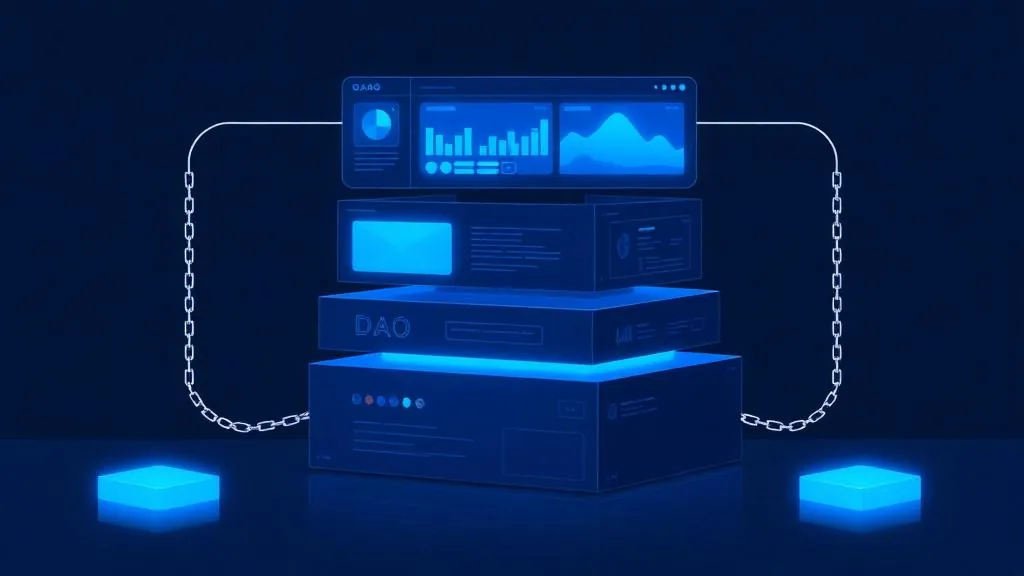
Most DAOs assemble four or five tools and assume they connect. The seams between them are where decisions get lost.
Discussion and signalling
Forums and offchain voting shape opinion cheaply, but they produce no authority and no transaction.
Binding voting
Governor contracts turn a result into an authorised payload with quorum and threshold enforced onchain.
Execution
Multisigs, timelocks and executors carry the payload to the chain. This is the layer most stacks leave manual.
The four layers most DAOs end up with
Discussion happens in a forum, signalling happens in an offchain voting tool, binding votes happen in a governor contract, and money moves through a multisig or treasury contract. Almost every stack is a variation on those four layers.
The seams between layers are where work is lost. A thread with no proposal, a passed signal with no onchain vote, or an approved vote with no transaction are all symptoms of a handoff that nobody owns.
Choosing tools without creating a maze
Prefer fewer tools with clear boundaries over a best in class tool at every layer. Every extra surface adds a login, a permission set and a place for the audit trail to break.
Judge each tool by whether it can hand off structured data to the next layer. A voting tool that exports a decision but not the payload it authorised leaves a human to retype the most dangerous part of the process.
Keep the execution path connected: this guide pairs well with timelock contract, dao voting and governance token, which cover the neighbouring steps between an approved vote and a settled onchain transaction.
Key concepts explained
New to this topic? These are the core terms you will meet again and again in governance work. Understanding them makes every proposal easier to read.
- Governance stack
- The layered set of tools a DAO uses: forum for discussion, voting interface for decisions, execution layer for transactions, and analytics for accountability.
- Governance surface
- The UI where members actually vote. It displays proposals but does not itself move funds - execution happens at the contract layer.
- Execution layer
- The infrastructure between approval and settlement: condition verification, timelocks, multisig coordination and cross-chain delivery. GovernChain is this layer.
- Indexer
- A service that reads onchain events into a queryable database, powering dashboards, notifications and audit reports.
Frequently asked questions
- What tools do DAOs use?
- Typically a forum for discussion, an offchain voting tool for signalling, a governor contract for binding votes, a multisig or treasury contract for funds, and an execution layer that carries approved decisions onchain.
- Do small DAOs need the full stack?
- No. A small group can run on a forum and a multisig. The extra layers become worthwhile once decisions move meaningful value or affect people outside the core team.
- What is usually missing from a DAO tool stack?
- Execution. Most stacks cover discussion and voting well, then leave the transaction itself to manual coordination between a few contributors.