
Fundamentals
Snapshot vs onchain voting
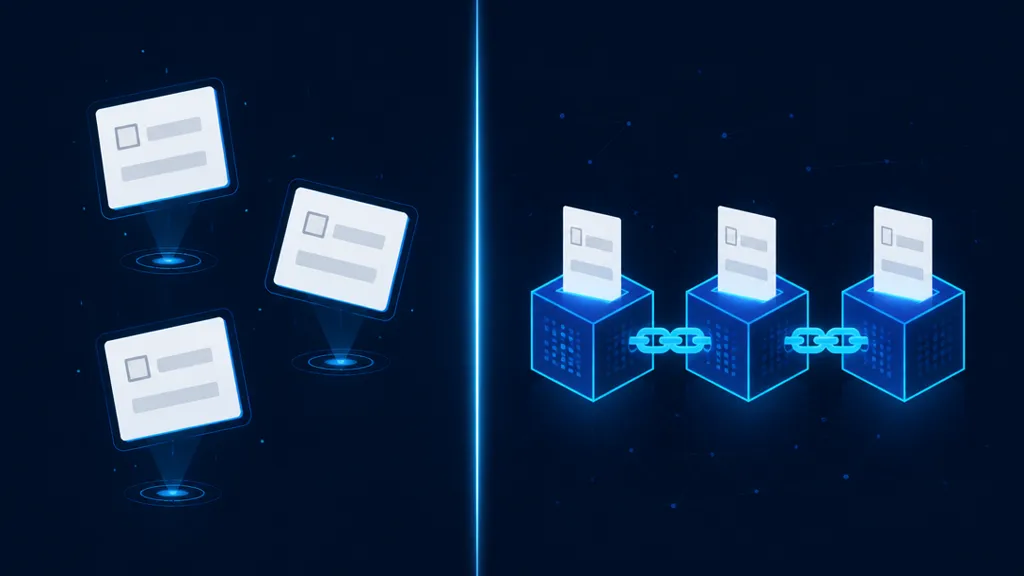
It is rarely either/or. Mature DAOs signal offchain and settle onchain.
Cost and participation
Offchain voting is free and lifts turnout dramatically. Onchain voting costs gas and filters out casual voters.
Authority
Only an onchain vote can authorise an onchain transaction without a trusted human in the middle.
The hybrid pattern
Temperature-check offchain, then run a binding onchain vote on the exact payload that will execute.
The honest trade-off
Offchain voting is free, fast and inclusive, so it captures sentiment well. It produces no authority, so someone must still act on the result and can act differently.
Onchain voting costs gas and moves slower, but the result is the authorisation. Nobody has to be trusted to implement it faithfully because the approved payload is the only thing that can execute.
Using both without losing the thread
A common pattern is a temperature check offchain followed by a binding onchain vote for anything that spends money or changes code. It keeps discussion cheap while keeping consequence verifiable.
The risk is drift between the two stages. Attach the exact payload to the offchain vote as well, so the binding stage is a confirmation of something people already inspected rather than a new document.
Keep the execution path connected: this guide pairs well with dao treasury management, multisig wallet and timelock contract, which cover the neighbouring steps between an approved vote and a settled onchain transaction.
Key concepts explained
New to this topic? These are the core terms you will meet again and again in governance work. Understanding them makes every proposal easier to read.
- Snapshot voting
- Gasless offchain voting signed with wallets and recorded offchain. Cheap and fast, but the result must be executed by someone trusted.
- Onchain vote
- A vote recorded and enforced by the governor contract itself. It costs gas but produces binding authority over the exact payload.
- Hybrid governance
- Using offchain signalling for temperature checks and onchain votes for binding decisions - the most common pattern in mature DAOs.
- Execution gap
- The trust hole between an offchain result and its onchain execution. Bridging it with verified, automated execution is the core problem GovernChain solves.
Frequently asked questions
- What is the difference between Snapshot and onchain voting?
- Snapshot style voting records signed messages offchain and costs nothing, but it cannot execute anything. Onchain voting happens in a contract, costs gas, and the result can directly authorise a transaction.
- Is offchain voting binding?
- Not by itself. It is binding only to the extent that a multisig or team chooses to honour it, which is a social commitment rather than a technical one.
- Should a DAO use both?
- Many do. Offchain for sentiment and prioritisation, onchain for anything that moves funds or changes contracts.