
Fundamentals
What is a DAO?
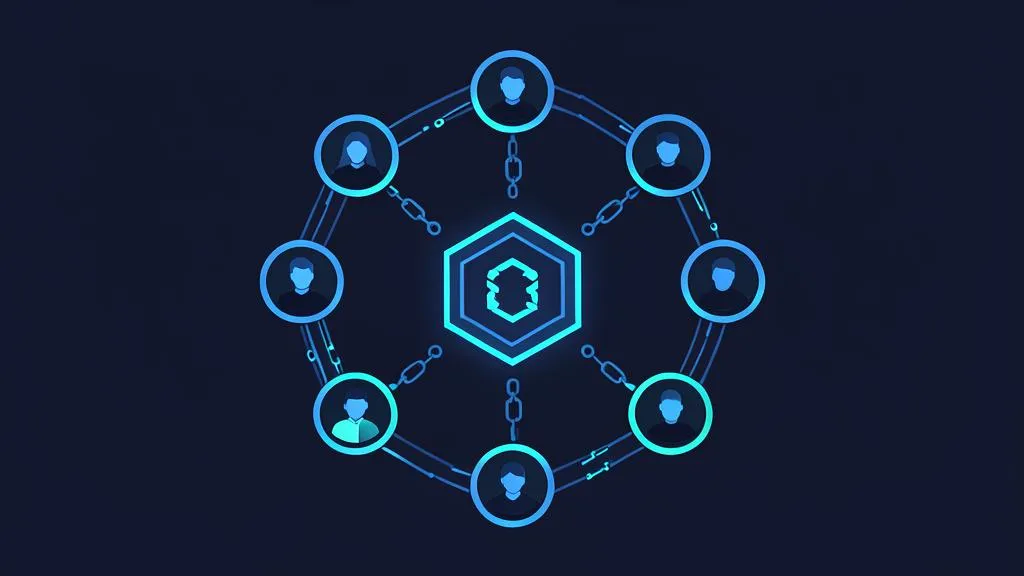
A DAO is a decentralized autonomous organization: a group that coordinates money and code through transparent rules instead of a company hierarchy. Members hold tokens, propose actions, vote, and the approved action executes onchain.
How a DAO actually works
Membership is usually represented by a token or an NFT. Holding it gives you voting power, and you can delegate that power to someone who votes more actively than you do.
Anyone who meets the proposal threshold can propose an action: pay a contributor, change a protocol parameter, upgrade a contract or move treasury funds.
If the vote clears quorum and the approval threshold, the action becomes executable. That is the part most explanations skip.
Where DAOs get stuck
Voting is the visible part, but execution is the hard part. Someone still has to encode the transaction, gather multisig signatures and broadcast it before the timelock window closes.
Without an execution layer, a passed proposal is just a forum post with a green checkmark.
What a healthy DAO looks like
Proposals carry the exact transaction they will execute, not a vague description.
Quorum, thresholds, signatures and timelocks are verified automatically.
Every executed decision is recorded with its transaction hash so anyone can audit it later.
What does DAO mean
DAO stands for decentralized autonomous organization. It is a group that coordinates through shared rules written into smart contracts instead of through a company hierarchy. Members propose, vote, and the approved outcome executes according to code rather than management discretion.
The word autonomous causes confusion. It does not mean the organisation runs itself without people. It means that once people decide, carrying out the decision does not require trusting an administrator to follow through.
How a DAO differs from a company
A company records ownership in a share register and decisions in minutes. A DAO records ownership in token balances and decisions in transactions, both readable by anyone. Membership is usually open, and the treasury is visible in real time.
The trade-offs are real. DAOs gain transparency, portability and verifiability, and give up speed, privacy and clear legal standing in most jurisdictions. Many groups therefore pair a DAO with a legal wrapper for contracts and tax.
Keep the execution path connected: this guide pairs well with dao proposal, onchain governance and dao treasury management, which cover the neighbouring steps between an approved vote and a settled onchain transaction.
Key concepts explained
New to this topic? These are the core terms you will meet again and again in governance work. Understanding them makes every proposal easier to read.
- Smart contract
- Self-executing code on a blockchain that holds assets and enforces rules. A DAO's bylaws live in smart contracts instead of a filing cabinet.
- Token holder
- Anyone holding the DAO's governance token. Holding confers voting power and, often, a claim on the community's shared resources.
- Proposal lifecycle
- The path every decision takes: draft, discuss, vote, verify, execute, record. DAOs differ mostly in how much of this lifecycle is enforced by code.
- Onchain vs offchain
- Onchain actions are settled and provable on the blockchain; offchain actions are conversations and polls. Mature DAOs use both, with onchain execution as the final word.
Frequently asked questions
- What is a DAO in simple terms?
- A DAO is an internet native organisation whose rules live in smart contracts. Members hold voting power, vote on proposals, and approved decisions execute onchain from a shared treasury.
- What does DAO stand for?
- Decentralized autonomous organization.
- Are DAOs legal?
- It depends on jurisdiction. Some places recognise DAO legal entities, others treat an unregistered DAO as a general partnership, which is why many adopt a foundation or LLC wrapper.
- How do DAOs make money?
- Through protocol fees, treasury assets, investments, grants or products the organisation operates. Revenue flows to the treasury and is deployed by governance decision.